

5 Signs Your Solid Tires Need Replacement Before Failure Happens
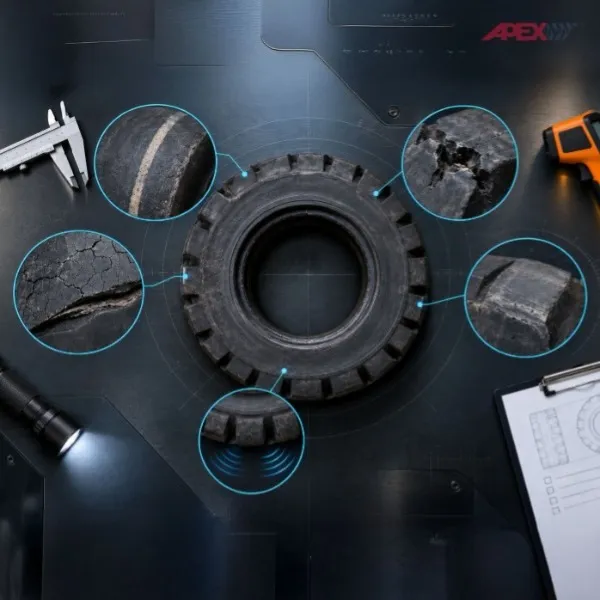
Solid tires do not go flat, but they still wear, overheat, and sustain structural damage. Without regular inspection, a tire may remain in service until it affects stability, operator comfort, equipment condition, or production uptime.
Here are five warning signs that replacement should be planned before failure occurs.
1. The Tire Has Reached Its Wear Line
Many solid tires have a molded wear or replacement line. Once the tire reaches this limit, the remaining rubber may no longer provide its intended load support, shock absorption, traction, and heat management.
Always follow the tire and forklift manufacturers' criteria, as markings vary by model.
2. Chunking, Tearing, or Deep Cuts Are Spreading
Missing rubber, growing tears, or deep cuts indicate abnormal mechanical damage. Common causes include:
🔹 Sharp debris
🔹 Rough floors
🔹 Aggressive turning
🔹 Overloading
🔹 Excessive heat
🔹 Unsuitable tire compound
Damage near the tire base or exposed reinforcement requires immediate professional assessment.
3. Cracks or Separation Appear
Deepening cracks, gaps between rubber layers, swelling, distortion, discoloration, or a burnt-rubber smell may indicate fatigue or overheating.
Heavy loads, long travel distances, high speed, and frequent starts and stops can increase internal heat.
⚠️ Visible separation or major distortion means the truck should be removed from service for inspection.
4. The Tire Is Flat-Spotted or Wearing Unevenly
Flat spots, tapered wear, or one-sided shoulder wear can affect handling and stability. Possible causes include:
🔹 Wheel lock-up
🔹 Alignment problems
🔹 Worn components
🔹 Uneven loading
🔹 Mismatched tire diameters
Correct the cause before installing a replacement tire.
5. Operators Notice Vibration or Poor Handling
New vibration, rhythmic noise, pulling, reduced traction, or unstable handling may appear before damage looks severe.
Inspect the tire, wheel, bearing, axle, alignment, and operating route instead of waiting for the next service interval.
✅ Five-Minute Inspection Checklist
☑️ Is the tire at or beyond its wear line?
☑️ Are cuts, chunks, or tears increasing?
☑️ Are there deep cracks, separation, distortion, or exposed material?
☑️ Is the tire flat-spotted or uneven compared with the opposite tire?
☑️ Has vibration, noise, traction, steering, or stability changed?
📝 Record the tire position, service hours, damage type, operating route, and reason for removal.
This helps Operations Managers plan downtime, Maintenance Managers track wear, and Engineers identify the root cause.
🔧 Plan Replacement Before Downtime
APEXWAY helps industrial fleets evaluate wear patterns and select solid tires according to
⚙️ Load
⏱️ Duty cycle
🏭 Floor conditions
🌡️ Heat
⚪ Non-marking requirements
📩 Share your application details and tire photos with our team for a specification review.