
Road Construction/ Sandstone Field/ Waste & Recycling Yard
-
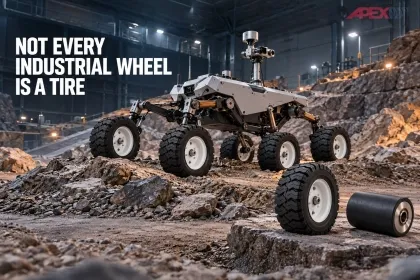
Not Every Industrial Wheel Is a Tire: Where Custom Rubber Wheels and Rollers Are Used
Custom rubber wheels and rollers for AGVs, AMRs, UGVs, conveyors, and automated equipment must be engineered around load, speed, dimensions, operating conditions, traction, and vibration requirements.
Proper rubber compound selection, metal core design, and rubber-to-metal bonding help improve wheel performance, durability, and reliability in specialized industrial applications. -
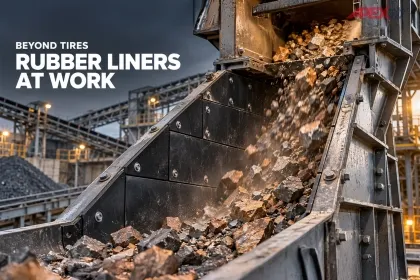
Beyond Tires: How Rubber Liners Protect Chutes, Hoppers and Transfer Points
Rubber wear liners can help absorb impact, reduce abrasion and noise, and protect chutes, hoppers, and transfer points in mining, quarrying, recycling, and bulk material handling operations.
Choosing the right rubber hardness, thickness, and liner structure depends on material characteristics, impact conditions, temperature, equipment design, and the type of wear involved. -
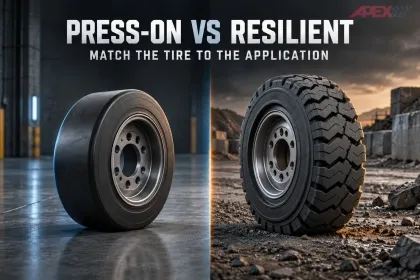
Press-On vs Resilient Solid Tires: Which One Is Right for Your Application?
Press-on solid tires offer compact dimensions, precise handling, and stability for forklifts operating mainly on smooth indoor floors.
Resilient solid tires provide greater cushioning and versatility for rough surfaces, outdoor use, and longer travel distances, making application conditions the key factor in choosing between them. -
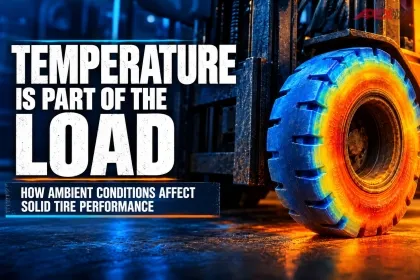
How Ambient Temperature Affects Solid Tire Performance
Ambient temperature can significantly affect solid tire flexibility, traction, heat dissipation, wear, and service life.
Understanding how tires behave in hot foundries, cold-storage facilities, and changing temperature zones helps operators select the right compound and reduce premature tire damage. -
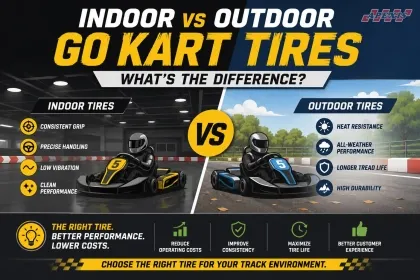
Indoor Go-Kart Tires vs Outdoor Go-Kart Tires: What's the Difference?
Indoor and outdoor go kart tracks create very different operating conditions, making tire selection critical for performance and cost control.
Choosing a tire designed for your specific environment can improve grip, extend tire life, and reduce overall maintenance expenses. -
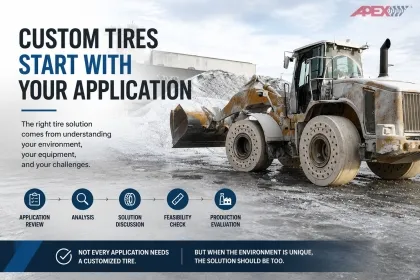
How Custom Industrial Tire Projects Actually Work
Many industrial tire problems are caused by a mismatch between the tire, the machine, and the operating environment rather than tire quality alone.
By evaluating real-world application conditions, operators can identify tire solutions that improve lifespan, reduce maintenance, and enhance overall performance. -
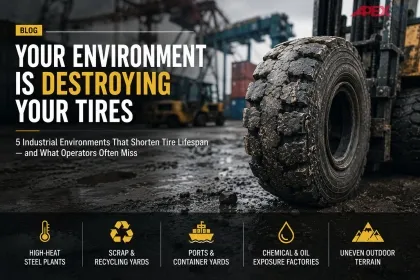
Your Environment Is Destroying Your Tires Faster Than You Think
The same industrial tire can perform very differently depending on temperature, terrain, debris, operating hours, and chemical exposure.
Understanding your working environment is the first step toward selecting a tire that delivers longer life, lower maintenance, and more reliable performance. -
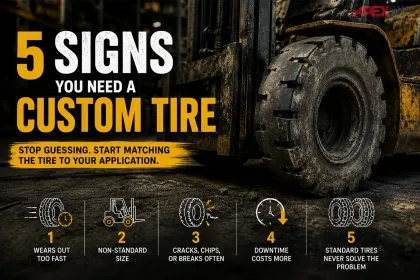
5 Signs You Need a Custom Tire
If your tires wear out too quickly, crack frequently, or never fully solve the same operational problem, a standard tire may not be the right fit.
Understanding your machine, environment, and workload can help identify when a custom tire solution is the better long-term investment. -
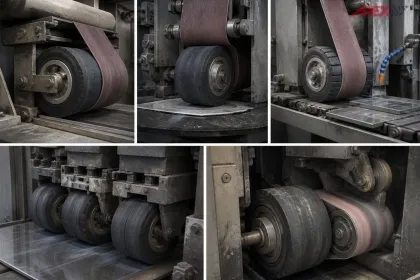
Why One Tire Doesn't Fit All Machines
Many industrial machines require more than a standard tire size—they need a tire designed for a specific function and operating condition.
Whether used for conveying, rotating, traction, or contact applications, the right custom tire solution can improve performance, lifespan, and machine efficiency. -
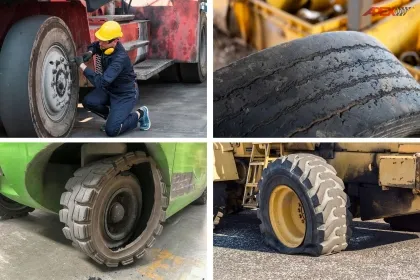
Why Tires Fail in Harsh Industrial Environments
Many tire failures occur because the tire is not designed for the actual working environment.
Matching the right compound, structure, and tread design to the application can significantly improve tire life, reduce downtime, and lower total operating costs. -
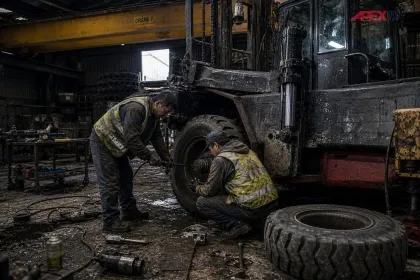
How Solid Tires Reduce Maintenance Frequency in Factory Operations
Solid tires eliminate punctures, air pressure maintenance, and unexpected tire failures, helping factories reduce maintenance workload and downtime.
By shifting maintenance from reactive repairs to predictable planning, solid tires can improve efficiency while lowering long-term operating costs. -
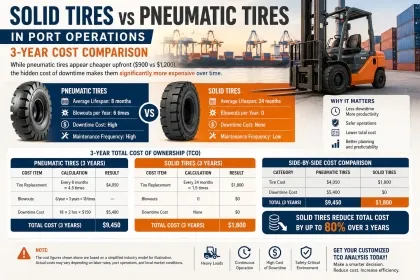
Solid Tires vs Pneumatic Tires in Port Operations: 3-Year Cost Comparison
In high-utilization port environments, the true cost of a tire extends far beyond its purchase price.
By reducing blowouts, maintenance requirements, and downtime, solid tires can provide substantial long-term savings and improve operational reliability over a three-year period. -
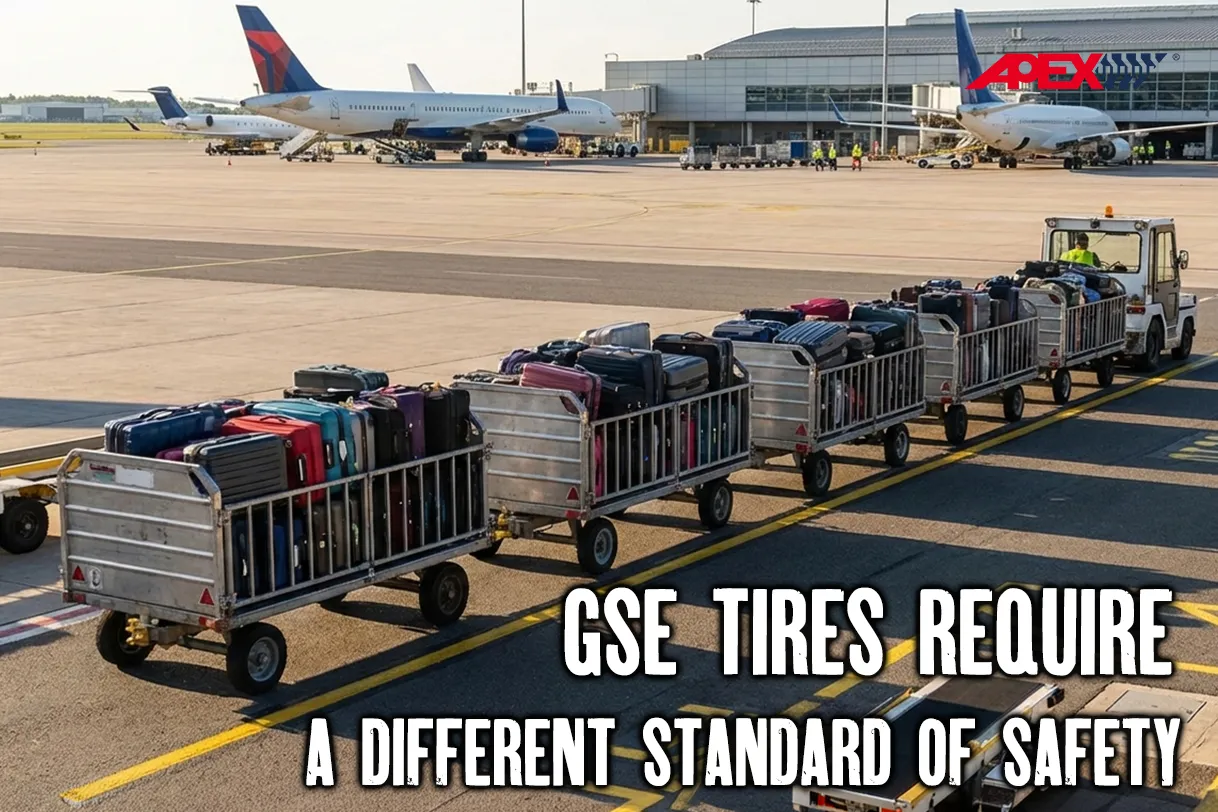
Why Airport GSE Tires Require a Different Standard of Safety
Airport operations demand tires that deliver reliable stability, precise handling, and predictable performance under continuous duty cycles.
Choosing the right GSE tire specification helps reduce downtime, improve safety compliance, and support efficient ground handling operations. -
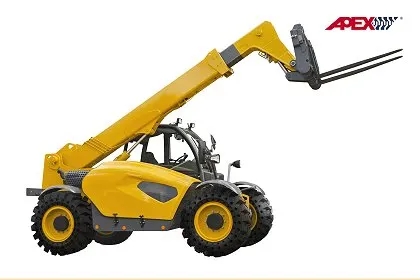
Choosing the Right Carriage Attachment for Your Telehandler
Choosing the right carriage attachment for your telehandler can significantly impact its versatility and efficiency. Carriages such as standard, side swing, side tilt, side shifting, and fork placement attachments cater to different operational needs, from lifting and transporting materials to handling uneven terrain. Understanding these options helps you select the best attachment for your specific tasks. APEXWAY provides solid tires tailored to fit your telehandler and ensure optimal performance.
-
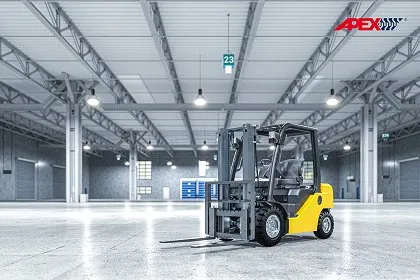
The Benefits Of Common Forklift Attachments And Their Uses
To increase a forklift's functionality and customize it for a particular activity, one might attach additional tools or equipment to it. Following are some typical forklift attachments and their applications: