
-
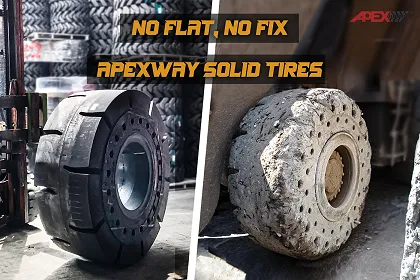
No Flat, No Fix
Explore the benefits of solid tires for tough applications on slow vehicles like wheel loaders, telehandlers, and forklifts. Solid tires offer unmatched durability, puncture resistance, and maintenance-free operation, lasting up to three times longer than pneumatic tires. With superior stability, high load capacity, and a smoother ride, solid tires are a cost-effective solution for harsh job sites.
-
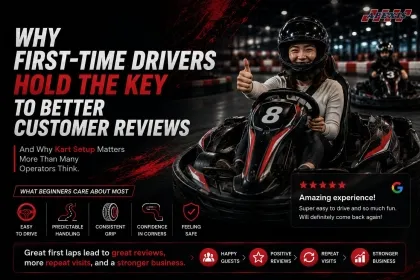
Why First-Time Drivers Hold The Key To Better Customer Reviews
First-time drivers often determine whether your rental track earns a five-star review or loses a future customer.
Discover how tire performance and predictable kart handling help beginners feel confident, enjoy their experience, and encourage repeat visits. -

What Makes Guests Feel A Kart Is "Easy To Drive"?
An easy-to-drive go kart is built on predictable handling, stable grip, and smooth steering—not just speed.
Learn how the right tire performance can improve guest confidence, enhance the driving experience, and encourage repeat visits to your rental track. -
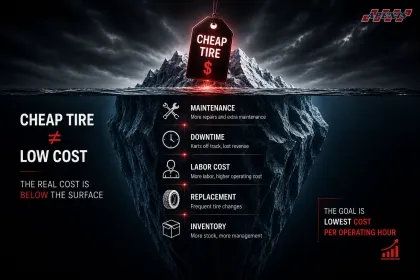
The Hidden Cost Of Cheap Go-Kart Tires
Cheap go kart tires may look attractive at first, but frequent replacement and inconsistent performance can create higher long-term costs.
For rental tracks, the smarter choice is to evaluate tire value by durability, consistency, downtime, and cost per operating hour. -
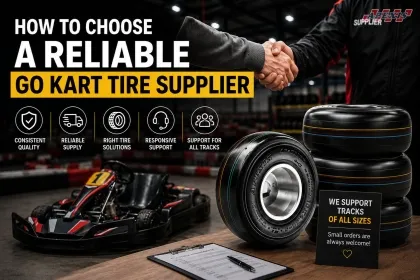
How To Choose A Reliable Go-Kart Tire Supplier
Choosing the right go kart tire supplier is about more than price—it affects tire consistency, operational efficiency, and long-term profitability.
This guide outlines five key factors rental track operators should evaluate before selecting a tire partner. -
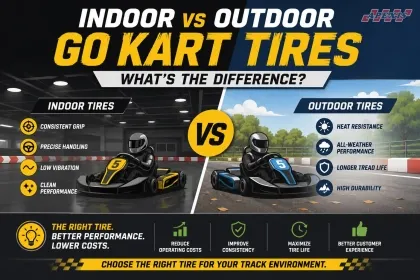
Indoor Go-Kart Tires vs Outdoor Go-Kart Tires: What's the Difference?
Indoor and outdoor go kart tracks create very different operating conditions, making tire selection critical for performance and cost control.
Choosing a tire designed for your specific environment can improve grip, extend tire life, and reduce overall maintenance expenses. -
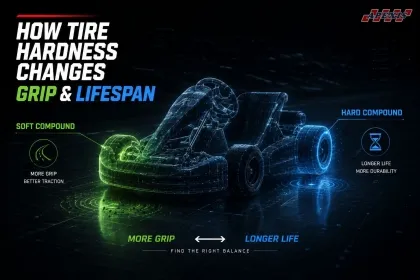
How Tire Hardness Changes Grip And Lifespan
Tire hardness plays a crucial role in determining grip, wear rate, and overall operating costs for rental go-kart fleets.
Choosing the right compound for your track conditions can improve driver experience while reducing tire replacement frequency and maintenance expenses. -
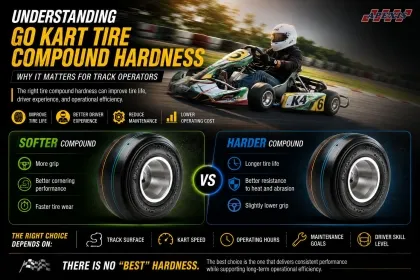
Understanding Go-Kart Tire Compound Hardness
Tire compound hardness directly influences grip, wear rate, maintenance requirements, and overall operating costs in rental kart operations.
By selecting the right compound for track conditions, operators can achieve a better balance between tire life, customer satisfaction, and profitability. -
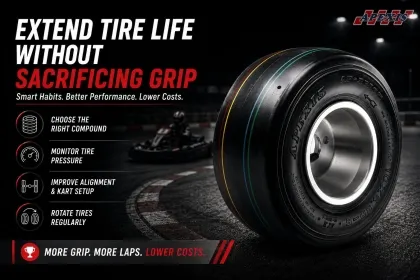
How To Extend Tire Life Without Sacrificing Grip
Extending tire life and maintaining grip do not have to be opposing goals in rental go-kart operations.
With the right tire compound, proper maintenance practices, and optimized kart setup, operators can lower tire costs while delivering a consistent on-track experience. -
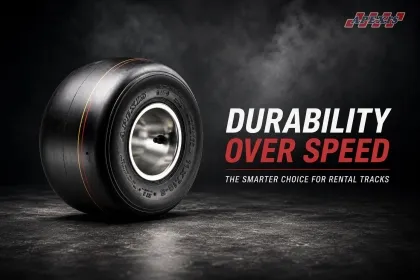
Why Tire Durability Matters More Than Speed For Rental Tracks
In rental go-kart operations, tire durability often has a bigger impact on profitability than maximum grip or lap speed.
Longer-lasting tires help reduce downtime, lower maintenance costs, and keep more karts on the track generating revenue. -
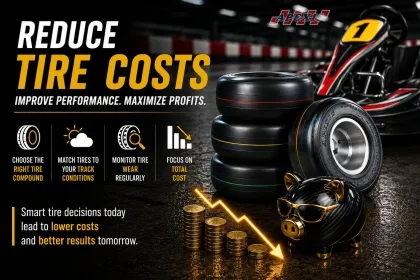
How to Reduce Tire Costs in Rental Go Kart Operations
Reducing tire costs in rental go kart operations is not just about buying cheaper tires—it is about maximizing the value of every tire used.
By selecting the right compound, monitoring wear, and evaluating total operating cost, operators can improve profitability while maintaining a consistent customer experience. -
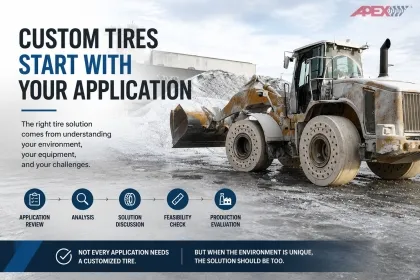
How Custom Industrial Tire Projects Actually Work
Many industrial tire problems are caused by a mismatch between the tire, the machine, and the operating environment rather than tire quality alone.
By evaluating real-world application conditions, operators can identify tire solutions that improve lifespan, reduce maintenance, and enhance overall performance. -
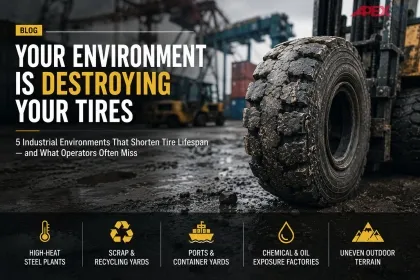
Your Environment Is Destroying Your Tires Faster Than You Think
The same industrial tire can perform very differently depending on temperature, terrain, debris, operating hours, and chemical exposure.
Understanding your working environment is the first step toward selecting a tire that delivers longer life, lower maintenance, and more reliable performance. -
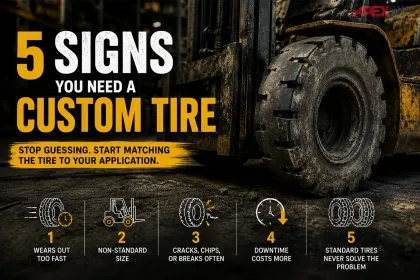
5 Signs You Need a Custom Tire
If your tires wear out too quickly, crack frequently, or never fully solve the same operational problem, a standard tire may not be the right fit.
Understanding your machine, environment, and workload can help identify when a custom tire solution is the better long-term investment. -
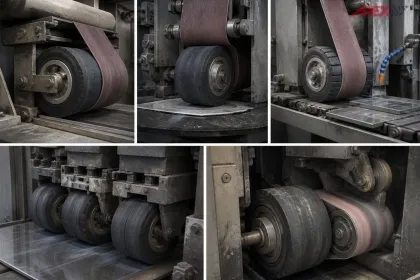
Why One Tire Doesn't Fit All Machines
Many industrial machines require more than a standard tire size—they need a tire designed for a specific function and operating condition.
Whether used for conveying, rotating, traction, or contact applications, the right custom tire solution can improve performance, lifespan, and machine efficiency.
SEARCH PRODUCT