
How Tire Hardness Changes Grip And Lifespan
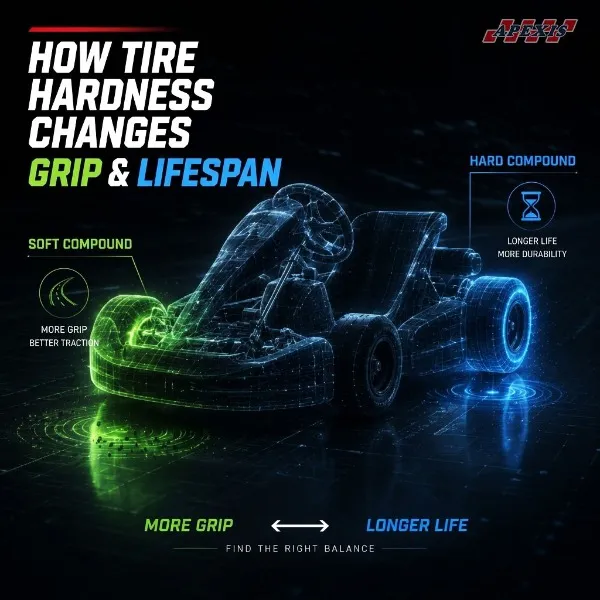
One of the biggest factors behind tire performance is compound hardness.
A tire that is too soft or too hard for your track conditions can increase costs and reduce driving experience.
🔍 What Is Tire Hardness?
Tire hardness refers to how soft or hard the rubber compound is.
Generally:
🟢 Softer Compound
- More grip
- Faster lap times
- Better cornering performance
- Wears out faster
🔵 Harder Compound
- Longer tire life
- More stable performance
- Lower tire replacement costs
- Less overall grip
🏎️ Which One Is Better For Rental Tracks?
For most rental go kart operations, tire lifespan is often more important than maximum grip.
Rental karts run:
- Many drivers every day
- Long operating hours
- Different driving styles
A compound that is too soft may provide great grip, but tire wear can increase significantly.
A medium or harder compound often delivers a better balance between:
✅ Grip
✅ Durability
✅ Operating cost
🌦️ Track Conditions Matter
The best tire hardness also depends on your environment.
☀️ Hot outdoor tracks may benefit from harder compounds.
🏢 Indoor tracks with smooth surfaces may use softer compounds to improve traction.
There is no single compound that works everywhere.
🎯 Final Thought
Choosing the right tire hardness is not about finding the softest tire.
It is about finding the best balance between:
🏁 Driver experience
💰 Tire cost
🔧 Maintenance efficiency
The right compound can help rental tracks reduce operating costs while maintaining consistent performance.