
How to Reduce Tire Costs in Rental Go Kart Operations
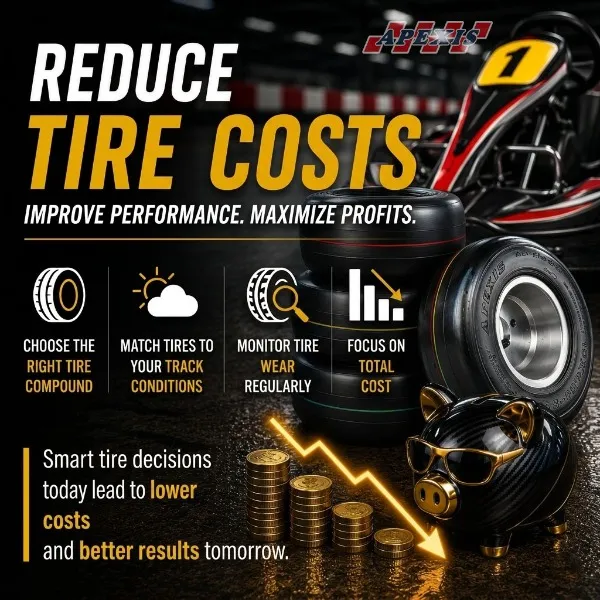
For many rental Go Kart operators, tires are one of the largest ongoing maintenance expenses. While the purchase price is important, the true cost of a tire depends on how long it lasts, how consistently it performs, and how often it needs to be replaced.
If you're looking to improve profitability without affecting the customer experience, here are four practical ways to reduce tire costs in your rental kart operation.
🛞 1. Choose the Right Tire Compound
Not every track needs the softest tire available.
Soft compounds can provide higher grip levels, but they also tend to wear more quickly. For most rental fleets, a medium or harder compound often delivers better long-term value because it offers a longer service life while maintaining predictable handling.
The goal is not to find the fastest tire. The goal is to find the tire that provides the best balance between performance and durability.
🌦️ 2. Match Tires to Your Track Conditions
Indoor and outdoor tracks create very different operating environments.
Indoor facilities typically have smoother surfaces and more stable temperatures. Outdoor tracks may experience heat, rain, dust, and varying pavement conditions throughout the year.
Using a tire designed for your specific track environment can significantly improve tire life and reduce replacement frequency.
A tire that performs well on one track may not be the ideal solution for another.
🔍 3. Monitor Tire Wear Regularly
Many operators either replace tires too early or wait too long before changing them.
Regular inspections can help identify uneven wear patterns, alignment issues, or operational habits that accelerate tire wear. Simple maintenance practices such as tire rotation and routine inspections can help maximize the usable life of every tire in your fleet.
Small maintenance improvements often lead to noticeable cost savings over time.
📊 4. Focus on Total Operating Cost, Not Just Purchase Price
The cheapest tire is not always the most cost-effective option.
When evaluating tire performance, consider factors such as service life, consistency, maintenance requirements, downtime, and replacement frequency.
A tire that lasts longer and requires fewer changes can often deliver a lower cost per lap, even if its initial purchase price is higher.
Looking at the bigger picture helps operators make better long-term decisions.
💡 Final Thoughts
Reducing tire costs is not simply about finding a lower purchase price.
Successful rental kart operators often look beyond the initial cost and focus on overall tire performance, lifespan, maintenance requirements, and operational consistency.
The right tire strategy can help reduce unexpected downtime, improve fleet efficiency, and create a more consistent driving experience for customers. Over time, these small improvements can have a meaningful impact on operating costs and profitability.
Every track is different. Surface conditions, kart setup, climate, driver behavior, and maintenance practices all influence tire wear and performance. What works well at one facility may not be the best solution for another.
📈 Compare Your Tire Performance
If you know how many operating hours, sessions, or laps your current tires deliver before replacement, you already have valuable data.
Comparing tire lifespan, wear patterns, and replacement frequency can often reveal opportunities to reduce costs without changing your customer experience.
For many track operators, the biggest savings are not found by spending less on tires—but by getting more value from every tire they purchase.
🚀 Take a Closer Look at Your Tire Data
Track tire life, replacement intervals, and maintenance records for the next few months. You may be surprised by how much these numbers reveal about your operation.
Sometimes, the most effective way to reduce tire costs is not changing tires more often—it's understanding why they wear in the first place.