
The Hidden Cost Of Cheap Go-Kart Tires
But for many rental tracks, cheap tires often become the most expensive option in the long run.
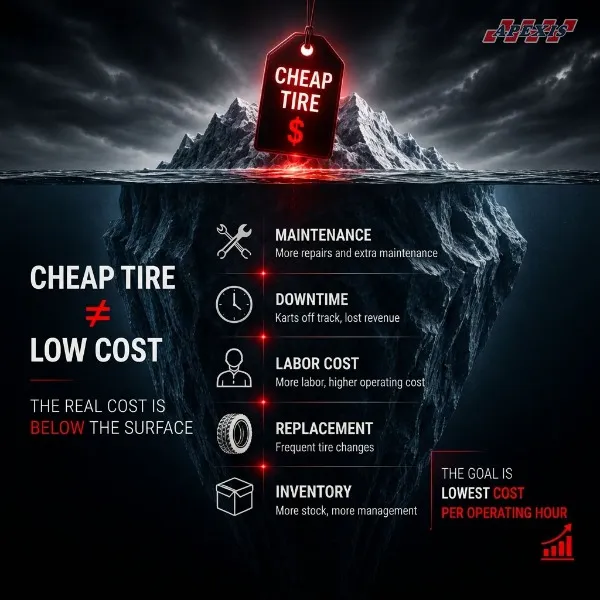
The Real Cost Isn't The Purchase Price
A tire that costs less upfront may wear out faster, lose grip sooner, or require more frequent replacements.
That means:
🔄 More tire changes
⏱️ More maintenance downtime
💰 Higher labor costs
📦 More inventory management
What looks like a small saving per tire can turn into a much bigger operating cost over time.
Inconsistent Performance Creates New Problems
Not all tires are made with the same quality standards.
Lower-quality tires may have inconsistent hardness, grip, or wear rates.
As a result:
⚠️ Drivers experience different handling from kart to kart
⚠️ Tire life becomes difficult to predict
⚠️ Maintenance schedules become less efficient
For rental operations, consistency is often more valuable than maximum performance.
Reliability Helps Reduce Total Cost
A reliable tire should deliver:
✅ Stable grip
✅ Predictable wear
✅ Consistent quality between production batches
✅ Longer service life
The goal is not simply to buy the cheapest tire.
The goal is to achieve the lowest cost per operating hour.
Final Thoughts
A cheap tire may save money today.
A reliable tire may save money every day.
For rental tracks, the smartest purchasing decision is often based on total operating cost—not just the price on the quotation. 📊🏁
Try calculating the cost per operating hour instead. You may discover a very different answer. 👀