

Why Do Industrial Solid Tires Crack? Common Causes And Solutions
Many operation managers and maintenance teams discover cracks during routine inspections and immediately assume the tire has failed.
However, in many cases, cracking is actually a symptom of operating conditions, maintenance practices, or tire selection issues.
Understanding the root cause can help reduce unexpected downtime and extend tire service life. 🔍
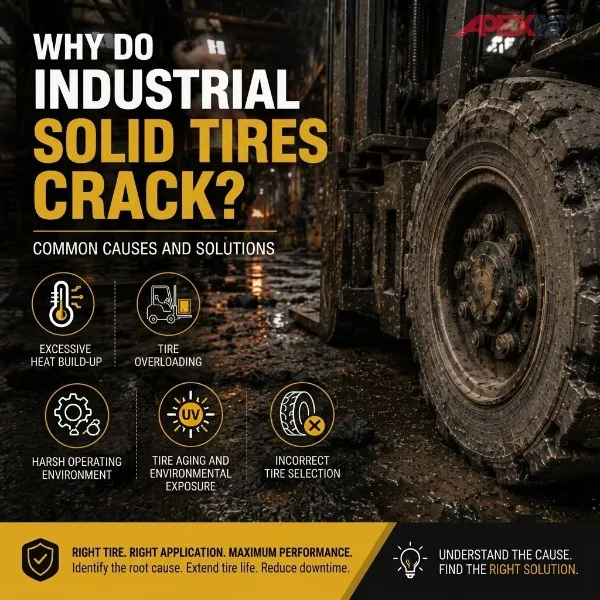
1️⃣ Excessive Heat Build-Up 🔥
Heat is one of the biggest enemies of industrial solid tires.
When tires continuously operate under:
- Long travel distances
- High speeds
- Heavy loads
- Frequent acceleration and braking
internal temperatures rise significantly.
Over time, excessive heat can accelerate rubber aging and lead to surface cracking.
Solution:
✅ Use tires designed for your operating speed and load.
✅ Avoid unnecessary high-speed operation.
✅ Allow equipment to cool down during long operating shifts.
2️⃣ Tire Overloading 📦
Every tire has a recommended load capacity.
Consistently carrying loads beyond the tire's design limit places excessive stress on the rubber structure.
This can cause:
- Sidewall cracks
- Chunking
- Premature tire failure
Solution:
✅ Verify actual wheel loads.
✅ Select tires with sufficient load capacity.
✅ Consider heavy-duty compounds for severe applications.
3️⃣ Harsh Operating Environment ⚙️
Some working environments are particularly aggressive to tires.
Examples include:
- Steel mills
- Scrap yards
- Recycling facilities
- Foundries
Sharp debris, hot materials, oils, and chemicals can accelerate rubber deterioration.
Solution:
✅ Regularly clean tires after operation.
✅ Remove embedded debris during inspections.
✅ Choose compounds developed for severe-duty applications.
4️⃣ Tire Aging And Environmental Exposure ☀️
Even when equipment is not operating, tires continue to age.
Prolonged exposure to:
- Direct sunlight (UV)
- Ozone
- Extreme temperatures
- Outdoor storage
can cause the rubber surface to dry out and crack.
Solution:
✅ Store equipment indoors whenever possible.
✅ Avoid long-term exposure to direct sunlight.
✅ Rotate idle equipment regularly.
5️⃣ Incorrect Tire Selection ❌
Using a tire designed for light-duty applications in severe environments can significantly shorten service life.
For example:
A standard warehouse tire may not perform well in a scrap yard or steel plant.
Solution:
✅ Match tire specifications to the actual application.
✅ Evaluate operating conditions before selecting tires.
✅ Work closely with your tire supplier to determine the most suitable solution.
Final Thoughts 💡
Not all cracks indicate immediate tire replacement.
The key is understanding:
🔹 Where the crack appears
🔹 How deep the crack is
🔹 What operating conditions the tire experiences
By identifying the root cause early, maintenance teams can reduce downtime, improve safety, and maximize tire lifespan.
Because in industrial operations, preventing failure is always less expensive than reacting to it. 🚜
Need help selecting the right solid tire for your application?
Share your equipment model, load information, and working environment with us. Our team will be happy to help evaluate the most suitable tire solution for your operation.