

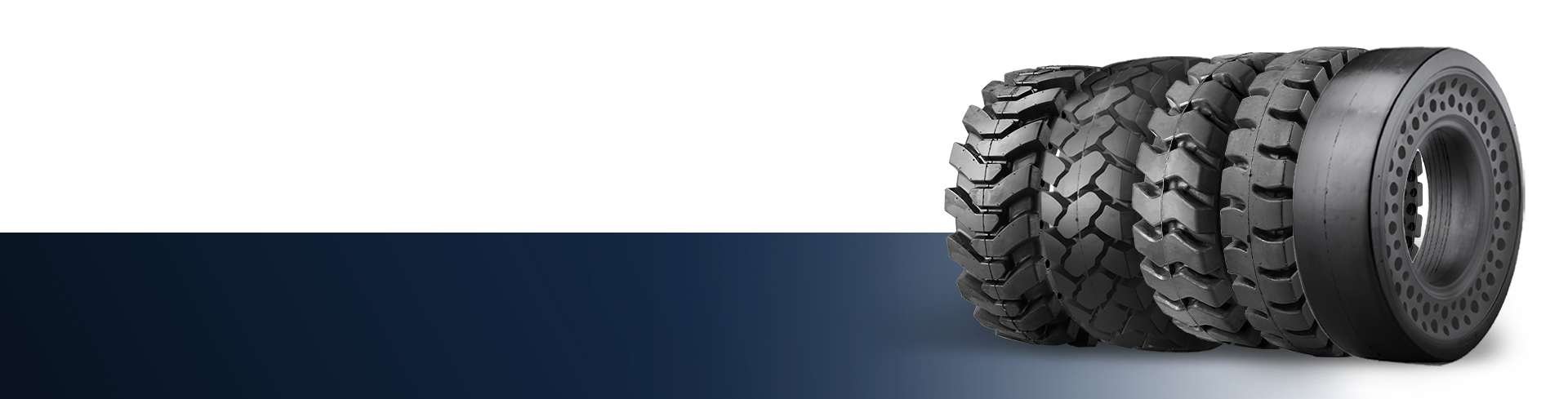
Why Tire Fitment Accuracy Matters More Than You Think
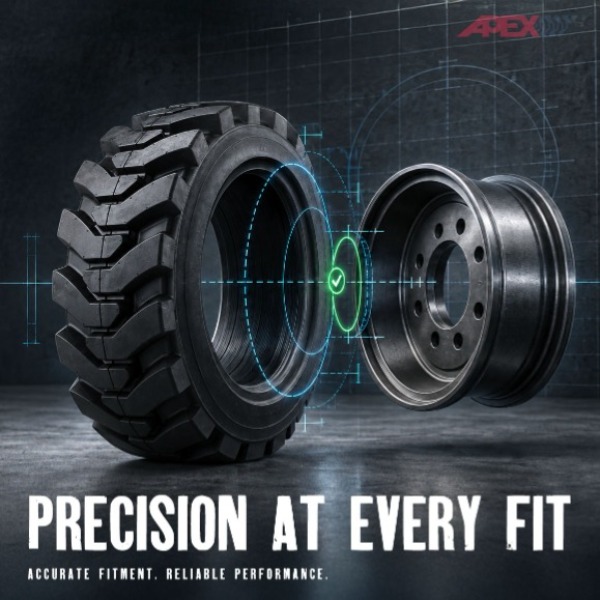
A solid tire may look like the right size—but “close enough” is not accurate enough.
Correct tire fitment means matching the tire, rim, mounting system, equipment specifications, and operating conditions. Even a small mismatch can affect safety, tire life, and equipment performance.
What Can Go Wrong with Incorrect Fitment?
1. Premature Tire Damage
An incompatible rim profile or incorrect tire dimensions can create uneven pressure around the tire base. Over time, this may cause irregular wear, cracking, tire movement, or separation. ⚠️
2. Reduced Equipment Stability
Tire dimensions influence ground clearance, steering geometry, and load distribution. Installing the wrong outside diameter or width may reduce stability—especially when turning, braking, or handling elevated loads.
3. Excessive Heat Build-Up
A tire that is undersized or unsuitable for the operating load may flex more than intended. This creates additional heat, accelerating rubber degradation and shortening service life. 🌡️
4. Installation and Rim Damage
Incorrect press equipment, tooling, or mounting procedures can damage the tire base or rim. For press-on bands, even a small difference in band diameter can prevent secure installation.
5. Unexpected Downtime
Fitment errors are often discovered only during installation—or after the equipment returns to service. The result may include rework, replacement costs, production delays, and avoidable downtime. 🛠️
What Should Be Verified?
Before ordering or installing a solid tire, confirm:
- Tire size and outside dimensions
- Rim size, width, and profile
- Mounting type and equipment requirements
- Maximum load and operating speed
- Application, surface, travel distance, and shift duration
- Manufacturer recommendations and installation method
When specifications are unclear, rim drawings, tire markings, equipment model details, and application photos can help prevent costly assumptions. 📐
Accuracy Protects the Entire Operation
Fitment accuracy is not only a purchasing detail. It directly affects equipment safety, maintenance planning, operator confidence, and total operating cost.
Not sure which solid tire fits your equipment?
APEXWAY can review your tire specifications, rim information, load requirements, and operating conditions to recommend a suitable solution.