
-
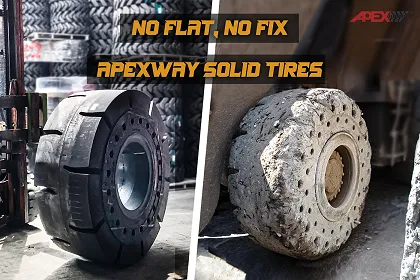
No Flat, No Fix
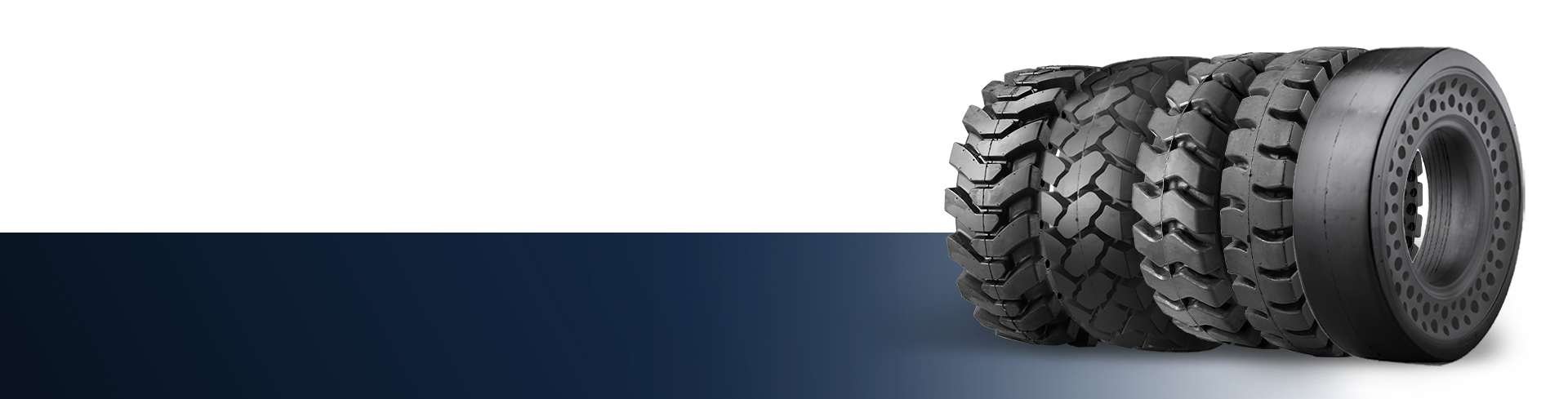
Explore the benefits of solid tires for tough applications on slow vehicles like wheel loaders, telehandlers, and forklifts. Solid tires offer unmatched durability, puncture resistance, and maintenance-free operation, lasting up to three times longer than pneumatic tires. With superior stability, high load capacity, and a smoother ride, solid tires are a cost-effective solution for harsh job sites.
-
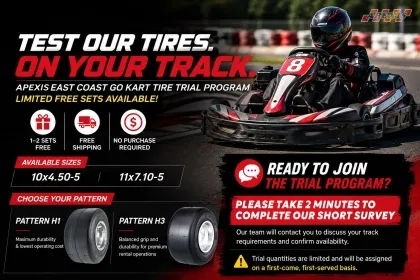
APEXIS East Coast Go Kart Tire Trial Program: Limited Free Sets Available
The APEXIS Go Kart Tire Trial Program gives selected U.S. East Coast rental kart facilities an opportunity to test H1 and H3 tires on their own tracks with 1–2 free tire sets, free shipping, and no purchase commitment. Operators can compare durability, grip, handling, tire life, and guest experience under real rental conditions before considering future tire sourcing decisions.
-
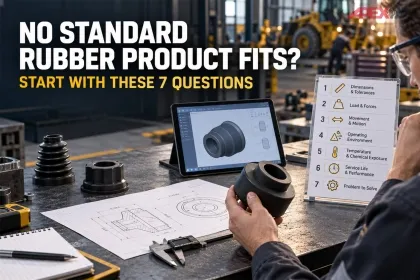
No Standard Rubber Product Fits? Here’s What Engineers Need to Know First
Developing a custom rubber part requires more than a photo or basic dimensions—load, movement, speed, temperature, environment, chemical exposure, and the current performance problem can all influence the final solution.
Preparing these seven key application details helps manufacturers evaluate the rubber compound, product structure, dimensions, and manufacturing feasibility more accurately. -
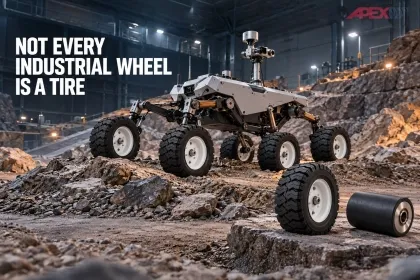
Not Every Industrial Wheel Is a Tire: Where Custom Rubber Wheels and Rollers Are Used
Custom rubber wheels and rollers for AGVs, AMRs, UGVs, conveyors, and automated equipment must be engineered around load, speed, dimensions, operating conditions, traction, and vibration requirements.
Proper rubber compound selection, metal core design, and rubber-to-metal bonding help improve wheel performance, durability, and reliability in specialized industrial applications. -
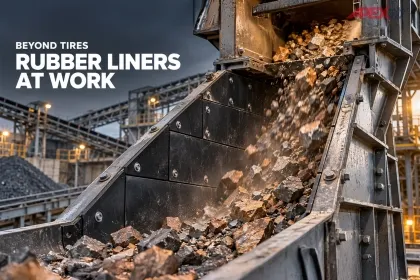
Beyond Tires: How Rubber Liners Protect Chutes, Hoppers and Transfer Points
Rubber wear liners can help absorb impact, reduce abrasion and noise, and protect chutes, hoppers, and transfer points in mining, quarrying, recycling, and bulk material handling operations.
Choosing the right rubber hardness, thickness, and liner structure depends on material characteristics, impact conditions, temperature, equipment design, and the type of wear involved. -
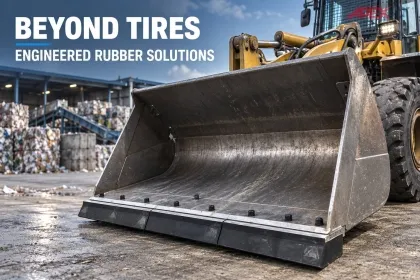
Beyond Tires: Engineered Rubber Solutions for Loader Buckets
Rubber cutting edges provide a replaceable wear layer between loader buckets and working surfaces, helping reduce bucket wear while protecting concrete and paved floors. Available in modular 36, 40, and 48-inch sections, they offer a practical engineered rubber solution for recycling, warehouse, factory, and material-handling applications.
-
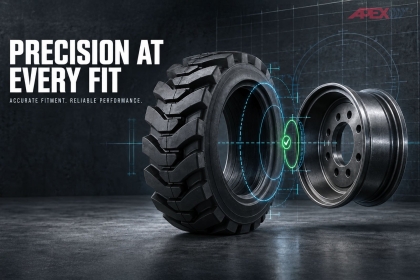
Why Tire Fitment Accuracy Matters More Than You Think
Correct solid tire fitment requires more than matching the tire size—it also depends on rim compatibility, mounting type, equipment specifications, load, and operating conditions.
Accurate fitment helps prevent premature tire damage, stability issues, installation problems, and costly equipment downtime. -
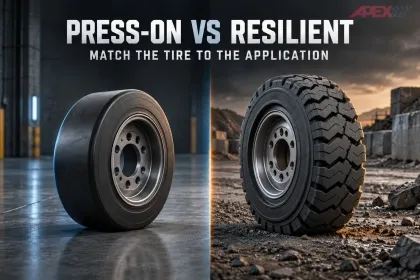
Press-On vs Resilient Solid Tires: Which One Is Right for Your Application?
Press-on solid tires offer compact dimensions, precise handling, and stability for forklifts operating mainly on smooth indoor floors.
Resilient solid tires provide greater cushioning and versatility for rough surfaces, outdoor use, and longer travel distances, making application conditions the key factor in choosing between them. -
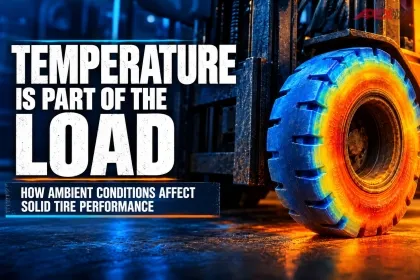
How Ambient Temperature Affects Solid Tire Performance
Ambient temperature can significantly affect solid tire flexibility, traction, heat dissipation, wear, and service life.
Understanding how tires behave in hot foundries, cold-storage facilities, and changing temperature zones helps operators select the right compound and reduce premature tire damage. -
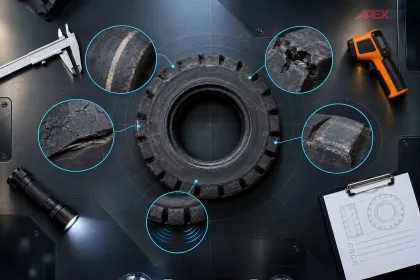
5 Signs Your Solid Tires Need Replacement Before Failure Happens
Solid tires rarely fail without warning—wear lines, chunking, cracks, uneven wear, and changes in handling can all signal that replacement is approaching.
Regular inspections and planned replacement help industrial fleets reduce unexpected downtime, improve safety, and extend equipment reliability. -
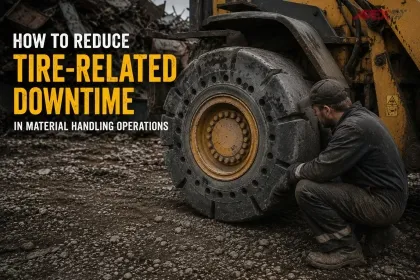
How To Reduce Tire-Related Downtime In Material Handling Operations
Tire-related downtime can disrupt material handling operations, delay shipments, and increase operating costs.
Proper tire selection, preventive inspections, planned replacement, and spare tire inventory can help keep equipment running and reduce unexpected stoppages. -
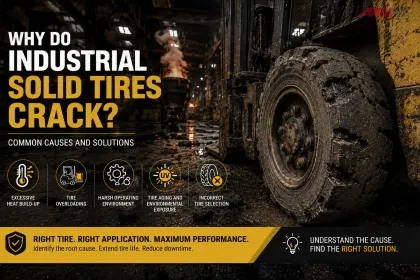
Why Do Industrial Solid Tires Crack? Common Causes And Solutions
Cracks in industrial solid tires can result from excessive heat, overloading, harsh working environments, aging, or improper tire selection.
Understanding the root cause helps maintenance teams prevent premature tire damage, reduce unexpected downtime, and extend tire service life. -
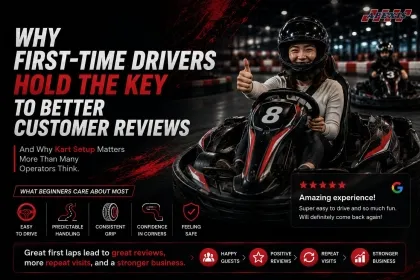
Why First-Time Drivers Hold The Key To Better Customer Reviews
First-time drivers often determine whether your rental track earns a five-star review or loses a future customer.
Discover how tire performance and predictable kart handling help beginners feel confident, enjoy their experience, and encourage repeat visits. -

What Makes Guests Feel A Kart Is "Easy To Drive"?
An easy-to-drive go kart is built on predictable handling, stable grip, and smooth steering—not just speed.
Learn how the right tire performance can improve guest confidence, enhance the driving experience, and encourage repeat visits to your rental track. -
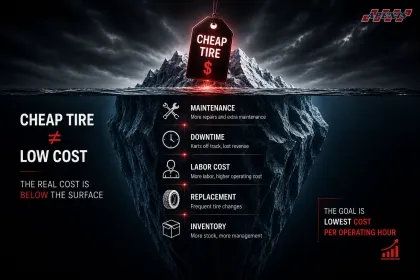
The Hidden Cost Of Cheap Go-Kart Tires
Cheap go kart tires may look attractive at first, but frequent replacement and inconsistent performance can create higher long-term costs.
For rental tracks, the smarter choice is to evaluate tire value by durability, consistency, downtime, and cost per operating hour.
SEARCH PRODUCT